Author: ummasedit73

  • Small Reading Rituals We Keep Coming Back To

    Small Reading Rituals We Keep Coming Back To

    Reading as connection

    There are days when reading feels magical and days when it lasts all of three minutes. I have learned to love both. The goal in our home is not perfection or performance. It is closeness. A short reading ritual at the end of the day has become one of the simplest ways to slow down and reconnect.

    Positive development is supported in such gentle ways through reading together. Vocabulary grows, attention strengthens, and emotional understanding deepens as children hear stories and ask questions. Just as important, they begin to associate books with comfort and presence.

    Mother and daughter using laptop at home

    A few lovely supports

    • Product: A front-facing bookshelf or cozy reading lamp to make books feel inviting and easy to reach.
    • Service: A local library story hour or a children’s bookstore event for low-pressure literacy support and community.
    • Book: Good Inside for mothers who want a compassionate framework for raising children while staying grounded themselves.

    Even a few quiet pages can become part of the emotional texture of childhood.

    If you are building a reading rhythm slowly, that still counts. The consistency of being together matters just as much as finishing the story.

  • Why Play Still Matters So Much

    Why Play Still Matters So Much

    Protecting unhurried play

    One of the most reassuring things I keep coming back to is this: children do not need every moment to be optimized. So much growth happens in ordinary play. Imagination, language, confidence, frustration tolerance, and problem-solving all show up there, often quietly.

    I have noticed that when I leave a little more room in the day for open-ended play, my child seems more grounded. There is less resistance, more curiosity, and a surprising amount of emotional processing happening through pretend games and sensory activities. It is a beautiful reminder that development is not always loud or measurable. Sometimes it looks like blocks on the floor and a child deeply absorbed in their own ideas.

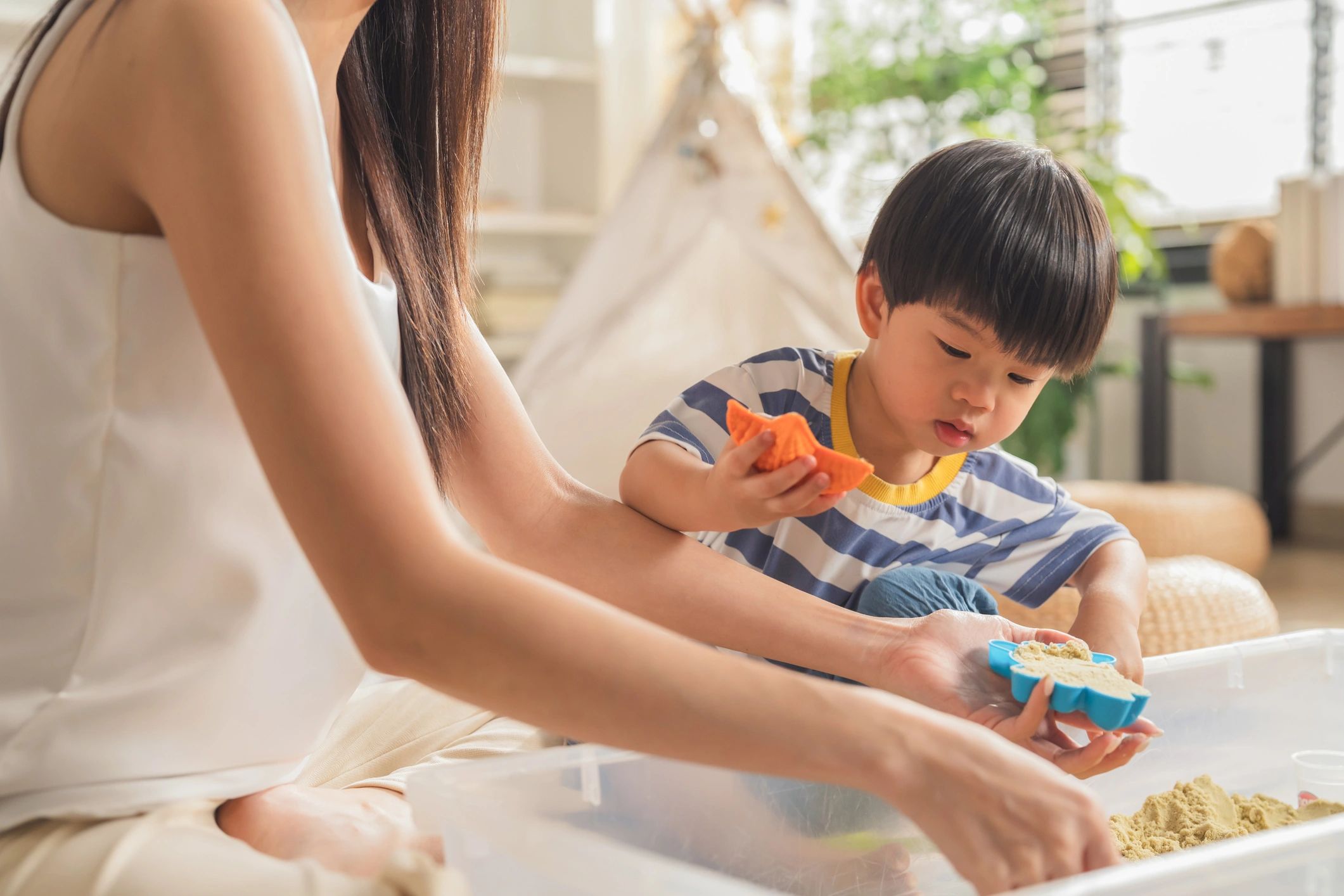
    Asian mother and her toddler son enjoy a happy weekend together, playing with hydrophobic sand in their home. The little boy engages in sensory play in a home sandbox, helping develop fine motor skills

    Current favorites

    • Product: Open-ended toys like magnetic tiles, wooden blocks, or sensory bins that invite creativity instead of prescribing one outcome.
    • Service: A play-based music class, toddler art studio, or neighborhood story time that supports social development without too much pressure.
    • Book: How to Talk So Little Kids Will Listen for everyday communication tools that make play and transitions feel more connected.

    Play is not extra. It is one of the ways children make sense of the world.

    If you have been wondering whether simple play is enough, I hope the answer feels encouraging today. It really can be.

  • What Helped Us Build Calmer Mornings

    What Helped Us Build Calmer Mornings

    A gentler start

    Some seasons of motherhood feel like a race against the clock. Lately, I have been learning that positive child development often begins with the smallest rhythms: a predictable wake-up, a little connection before correction, and a home environment that feels steady instead of rushed.

    What helped most in our home was simplifying the first hour of the day. I started preparing clothes the night before, keeping breakfast choices easy, and giving my child one small job each morning. That tiny sense of responsibility changed the mood more than I expected. Children often respond so well when they feel included instead of hurried along.

    Mother with kids drinking water during quiet family time indoors.

    A few things I recommend

    • Product: A simple visual routine chart for getting dressed, brushing teeth, and packing up. It supports independence without turning every step into a reminder.
    • Service: A local parent coaching session or child development workshop if mornings feel consistently stressful. Sometimes one outside perspective can reset the whole flow of family life.
    • Book: The Whole-Brain Child for practical, compassionate ways to understand behavior and build connection.

    When the morning feels calmer, everything that follows feels a little more possible.

    If you are in a hard morning season, I hope this reminds you that small changes count. A peaceful routine does not have to be perfect to be meaningful.

  • A Gentler Start to Motherhood: 7 Small Shifts That Make Family Life Feel More Grounded

    A softer way to begin

    Welcome to Umma’s Edit, a thoughtful space for mothers who want family life to feel a little calmer, more intentional, and more supported. This blog is here to share encouraging parenting ideas, trusted recommendations, and simple inspiration that helps everyday routines feel more grounded.

    Motherhood often comes with pressure to do everything perfectly, but most families do better with rhythms that are realistic, warm, and repeatable. These seven small shifts are designed to help you create a home life that feels steady without becoming rigid.

    1. Choose one anchor for the day

    Instead of trying to optimize every hour, pick one dependable moment that helps the day feel held together. It might be breakfast at the table, a stroller walk after lunch, or a short bedtime reading ritual. One anchor can bring more peace than a long list of goals.

    2. Make support easier to accept

    Many mothers are used to carrying too much alone. A practical way to lighten the load is to name specific help that would genuinely matter, such as a grocery drop-off, school pickup, or an hour to rest. Clear requests make it easier for others to show up well.

    3. Keep a short list of trusted essentials

    Not every product needs to be life-changing, but a few reliable essentials can reduce decision fatigue. A well-loved carrier, a favorite board book, or a simple meal tool can make daily life smoother. Over time, Umma’s Edit will share curated recommendations that are useful, thoughtful, and worth revisiting.

    4. Let routines be gentle, not strict

    Children benefit from predictability, but routines do not need to feel hard-edged to be effective. Think of them as soft structure: familiar cues, repeated patterns, and room for real life. Gentle routines support both connection and flexibility.

    5. Notice what is already working

    When days feel full, it is easy to focus only on what needs fixing. Try ending the day by naming one thing that went well: a calmer transition, a shared laugh, a meal everyone actually ate. Small evidence of progress builds confidence over time.

    6. Build a home library slowly

    Books can shape the emotional tone of family life in quiet but lasting ways. A small collection of comforting, age-appropriate favorites can support bonding, language, and rest. Thoughtful book recommendations will be a meaningful part of what this space offers.

    7. Leave room for your own voice

    Advice can be helpful, but motherhood is not one-size-fits-all. The goal is not to copy someone else’s system exactly. It is to gather what is useful, adapt it to your family, and trust the wisdom you are building day by day.

    Small, caring changes often shape family life more deeply than dramatic overhauls.

    At Umma’s Edit, you can expect a caring mix of parenting insight, curated recommendations, and practical encouragement for everyday family life. If you are looking for a warm, polished resource that helps you parent with confidence and intention, you are in the right place.